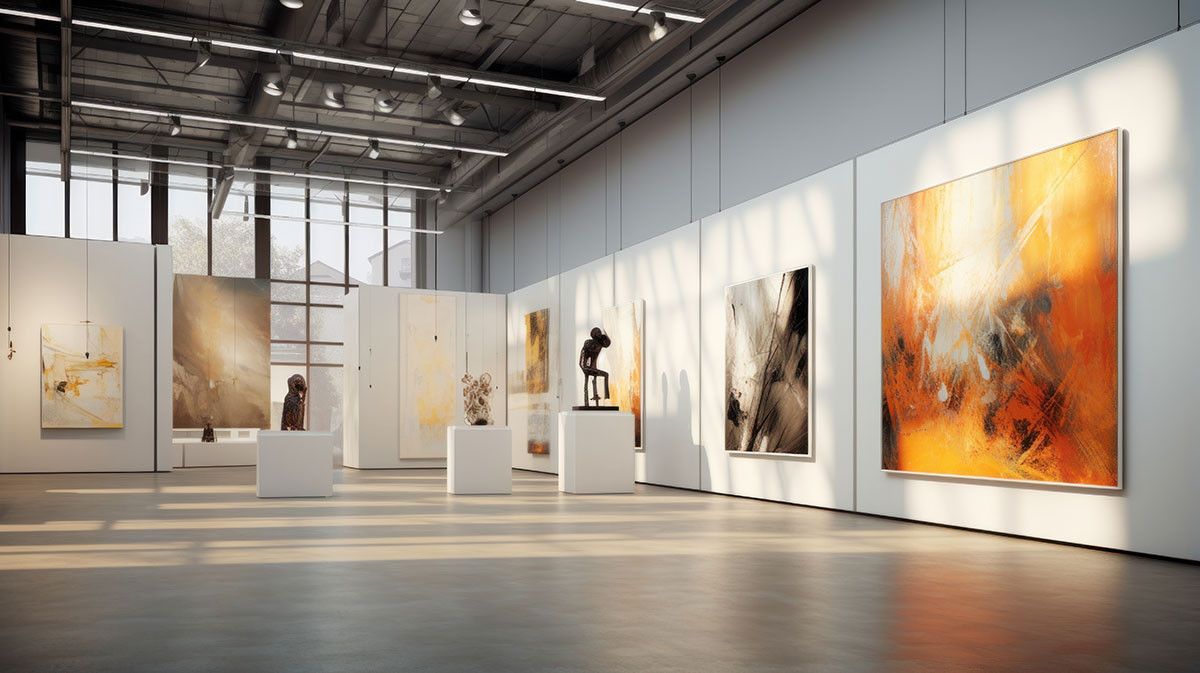
Art has always been a way for me to connect with the world around me. I find myself drawn to textures, shapes, and the physical presence of materials. Whether I am molding clay on a pottery wheel, chiseling stone into a sculpture, or layering paint on a canvas, the way surfaces and forms interact with light and touch excites me in ways words often cannot capture. For me, contemporary art is not just about making something that looks good. It is about creating something that can be felt, both physically and emotionally.
The Joy of Working with Materials
One of the things I love most about art is the freedom to explore materials. Each medium has its own language. Clay, for example, is forgiving but demanding at the same time. It allows me to experiment with shapes, smooth and rough textures, and intricate details that might not be possible in other forms. When I work with clay, I am constantly aware of its softness and how it responds to my hands. There is something incredibly satisfying about feeling the material give under pressure, shaping it into forms that start as abstract ideas in my mind.
Paint, on the other hand, offers a completely different kind of exploration. The texture of paint can be built up, scraped away, or combined with other materials to create depth and movement. I often play with layering techniques to give my paintings a tactile quality. I want people to not only see the work but almost feel it with their eyes. Sculpture brings yet another dimension. Working in three-dimensional space allows me to think about how forms interact with their surroundings and how people move around and experience them.
Finding Inspiration in Everyday Life
Inspiration can come from the simplest places. I often find myself observing the way sunlight falls on a field, the rough bark of a tree, or the curves and edges of buildings in my town of Argyle, Texas. These small details influence how I think about form and texture in my work. I try to translate the physical qualities of these experiences into my art. The goal is to create a connection between the viewer and the familiar textures of life while also introducing new ways to see them.
Human emotion also plays a significant role in my work. I like to explore feelings through form and texture. A smooth, flowing shape can convey calmness, while jagged, rough surfaces might express tension or struggle. Art allows me to communicate in a language beyond words. By carefully considering how materials behave and how forms interact, I can evoke subtle emotions and invite viewers to engage with my work on a deeper level.
Balancing Tradition and Innovation
While I draw a lot of inspiration from contemporary ideas, I also respect traditional techniques. Learning the basics of pottery, sculpture, and painting has given me the foundation to take creative risks. Understanding how materials behave and mastering certain techniques allows me to push boundaries without losing control over the work. I enjoy combining classical approaches with experimental methods to create pieces that feel both familiar and fresh. This balance between tradition and innovation keeps my art dynamic and evolving.
Experimentation is key in contemporary art. I am not afraid to try new textures, mix unconventional materials, or manipulate forms in unexpected ways. Some experiments succeed and some fail, but every attempt teaches me something new about my craft. I encourage other artists to embrace this process. Exploring texture and form is not just about achieving perfection. It is about discovery, curiosity, and the joy of seeing materials come to life under your hands.
Engaging the Viewer
One of my favorite aspects of working with texture and form is how it can engage the viewer. Art is not just about the artist’s experience. It is about creating something that resonates with others. When a person encounters a piece of my work, I hope they notice the tactile qualities, the layers, and the subtleties in shape. I want them to pause, lean in, and perhaps even imagine touching it. Texture and form create a bridge between the physical world and the emotional response of the viewer.
I also like to involve the community in my art when possible. Participating in local projects and exhibitions allows me to see how different people interact with my work. Observing their reactions teaches me a lot about how texture and form influence perception and emotion. Art becomes a conversation, not just a statement. This interaction is what makes creating contemporary art so rewarding.
Exploring texture and form is at the heart of my artistic practice. It allows me to experiment, express emotion, and connect with people in ways that words cannot. Each medium offers a unique opportunity to play with surfaces, shapes, and spaces. By observing the world around me, combining traditional techniques with contemporary approaches, and being open to experimentation, I continue to grow as an artist.
For anyone interested in contemporary art, I encourage you to look closely at texture and form. Notice how materials interact, how shapes occupy space, and how these elements can evoke emotion. Whether you are an artist or a viewer, there is something deeply rewarding in discovering the physical and emotional layers that make art come alive.